

AI contract review has moved from pilot project to routine tool in many legal teams. For legal assistants, the change is less about whether the role survives and more about what a normal day now contains. Software can flag clauses, pull out dates and list obligations in minutes. Someone still has to prepare the files, check the output and make sure the right person acts on it. Increasingly, that someone is the legal assistant.
What Changes in the Daily Workload
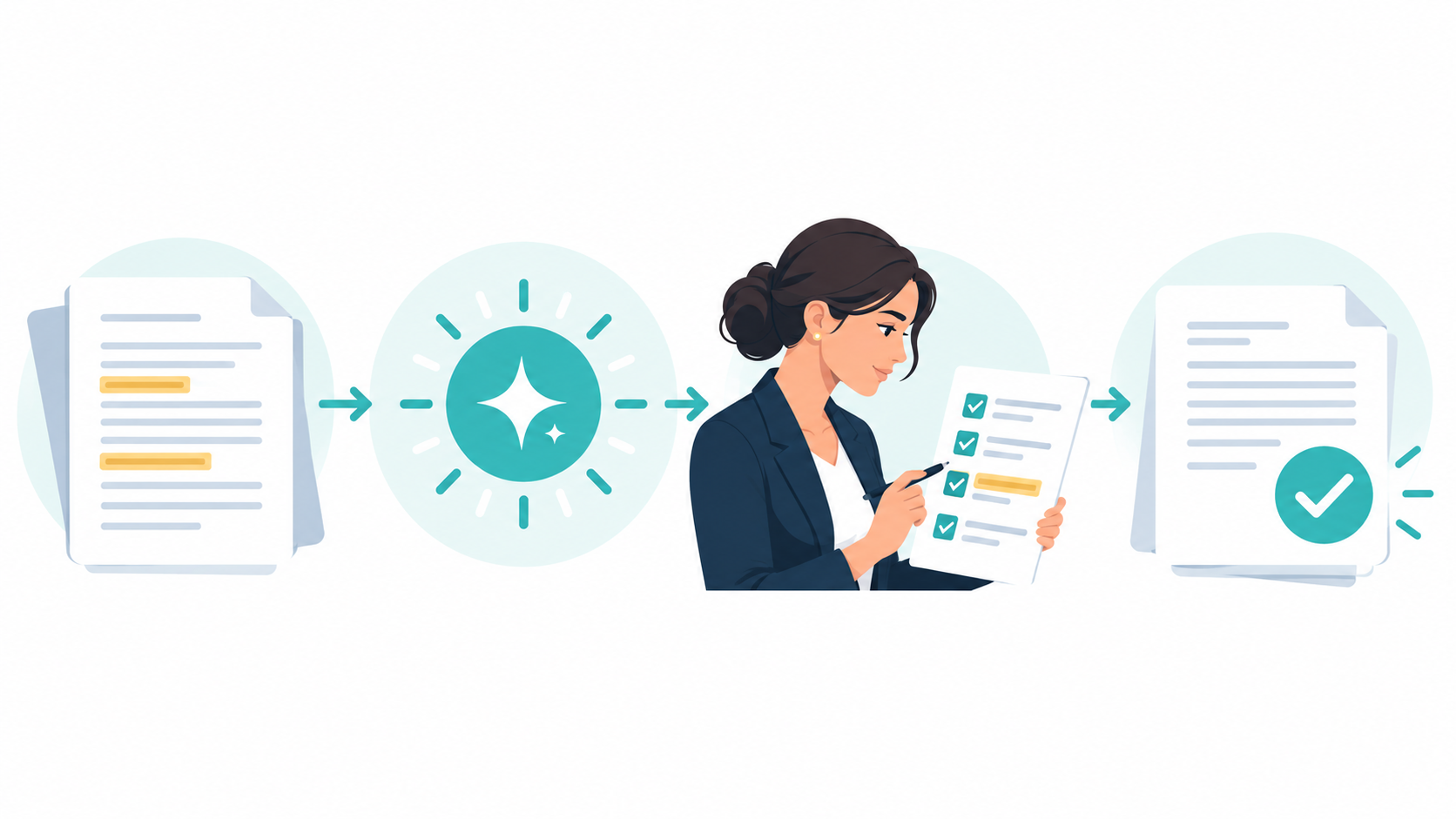
The biggest shift is away from manual first-pass reading and data entry, and toward triage and verification. A typical day might now include:
- Preparing clean, correctly named contract files before they enter a review workflow
- Checking extracted fields such as parties, renewal dates and notice periods against the source document
- Routing flagged clauses to the right attorney with a short note on why they were flagged
- Keeping the clause library, renewal calendar and contract records up to date
None of this removes the need for organization and attention to detail. It moves that attention from typing information in to confirming that the information is right. The best results come when the assistant and the reviewing lawyer agree up front on what counts as a routine fix and what needs a lawyer's eyes.
Why Human Checking Still Matters
AI review is fast, but it is not infallible. Poor scans, unusual formatting, defined terms and cross-references can all lead to missed or misread provisions, and a risk score without context can mislead as easily as it helps. Legal assistants are often the first to notice that a date looks wrong, a party name does not match, or a flagged clause was taken out of context. Judgment on legal risk stays with lawyers, but assistants increasingly own the quality of the process that feeds those decisions.
Skills That Gain Value
Contract literacy becomes more useful: knowing what a termination, liability or renewal clause does makes it easier to spot a bad extraction. So does data hygiene, clear escalation notes and comfort with review and e-signature tools. Much of this work is digital and well documented, which suits distributed teams. For anyone weighing remote legal assistant jobs, familiarity with contract data and review workflows is a practical way to stand out.
What Teams Should Do in 2027
Teams that get the most from AI review treat it as a workflow, not a switch. That means writing a simple review playbook, deciding where human sign-off is required, and training assistants on how the tool behaves and where it tends to fail. It also means tracking basic measures such as review cycle time and correction rates, and protecting client confidentiality with sensible access controls, especially when staff work remotely.
Conclusion
AI contract review does not make legal assistants redundant. It changes the job from reading and re-keying to checking, organizing and escalating. Teams that invest in those skills will get faster reviews, cleaner contract data and fewer surprises when a renewal or notice date comes due.
The opinions on this page are for general information purposes only and do not constitute legal advice on which you should rely.


